

PhD Alumni
Dr. Asanka Sayakkara
University College Dublin
Asanka Sayakkara completed his PhD in the School of Computer Science, UCD, under the co-supervision of Dr. Nhien-An Le-Khac and Dr. Mark Scanlon. He graduated from University of Colombo, Sri Lanka with a bachelors degree in Computer Science.
His PhD research evolved around forensics in IoT big data.
Research Output
Publications
- 2025
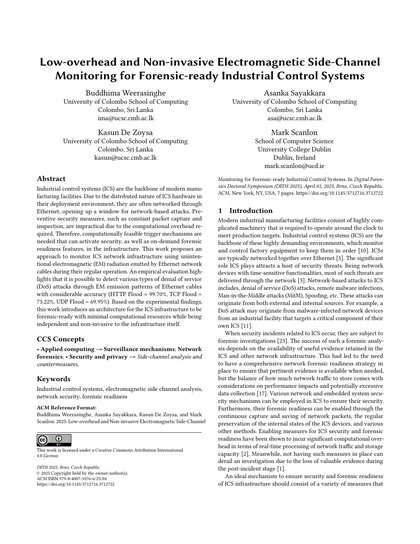 Low-overhead and Non-invasive Electromagnetic Side-Channel Monitoring for Forensic-ready Industrial Control Systems
Digital Forensics Doctoral Symposium
- 2024
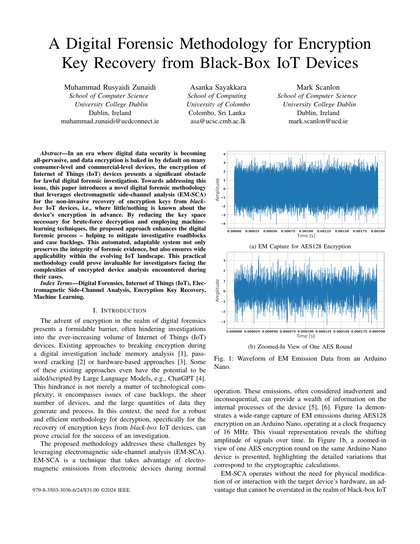 A Digital Forensic Methodology for Encryption Key Recovery from Black-Box IoT Devices
Proceedings of the 12th International Symposium on Digital Forensics and Security
- 2024
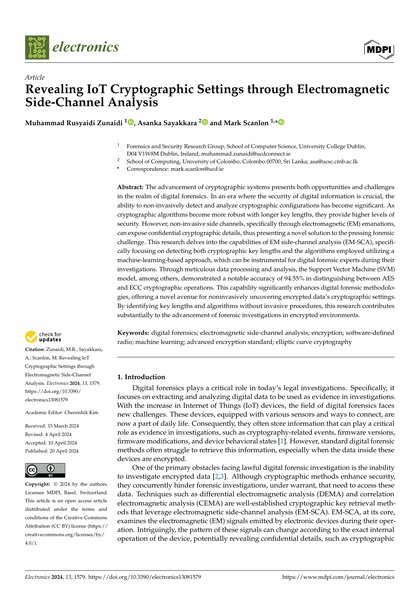 Revealing IoT Cryptographic Settings through Electromagnetic Side-Channel Analysis
Electronics Vol. 13 Article 1579
- 2024
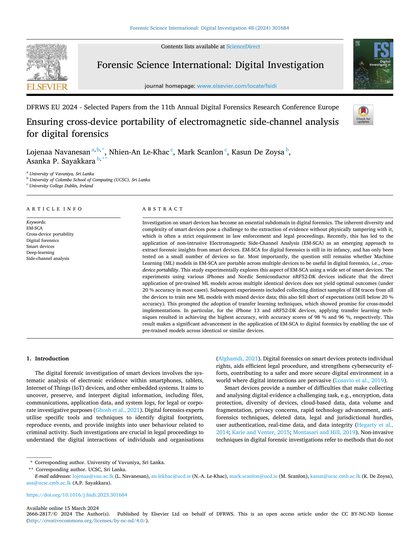 Ensuring Cross-Device Portability of Electromagnetic Side-Channel Analysis for Digital Forensics
Forensic Science International: Digital Investigation Vol. 48 Article 301684
- 2023
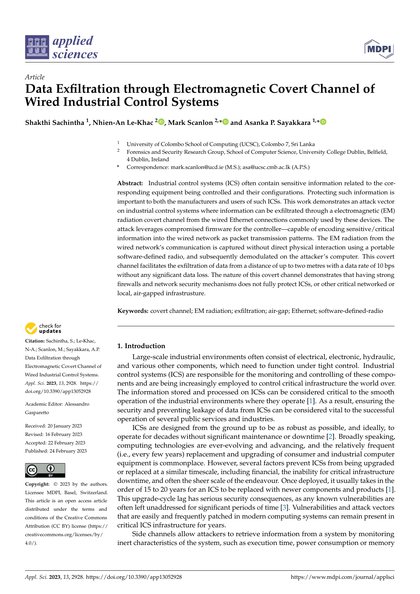 Data Exfiltration through Electromagnetic Covert Channel of Wired Industrial Control Systems
Applied Sciences Vol. 13 Article 2928
- 2021
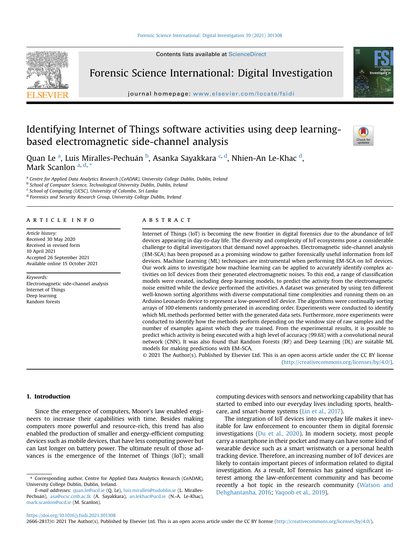 Identifying Internet of Things Software Activities using Deep Learning-based Electromagnetic Side-Channel Analysis
Forensic Science International: Digital Investigation Vol. 39 Article 301308
- 2020
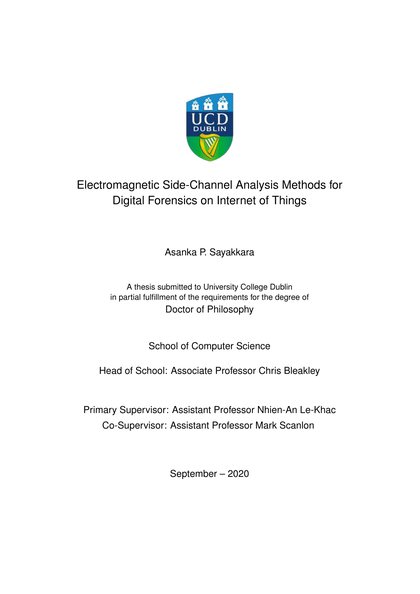
- 2020
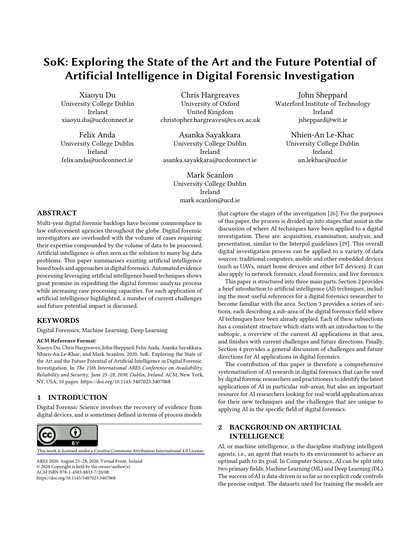 SoK: Exploring the State of the Art and the Future Potential of Artificial Intelligence in Digital Forensic Investigation
The 13th International Workshop on Digital Forensics (WSDF), held at the 15th International Conference on Availability, Reliability and Security (ARES)
- 2020
 Facilitating Electromagnetic Side-Channel Analysis for IoT Investigation: Evaluating the EMvidence Framework
Forensic Science International: Digital Investigation Vol. 33 Article 301003
- 2020
 Cutting through the Emissions: Feature Selection from Electromagnetic Side-Channel Data for Activity Detection
Forensic Science International: Digital Investigation Vol. 32 Article 300927
- 2020
 EMvidence: A Framework for Digital Evidence Acquisition from IoT Devices through Electromagnetic Side-Channel Analysis
Forensic Science International: Digital Investigation Vol. 32 Article 300907
- 2019
 A Survey of Electromagnetic Side-Channel Attacks and Discussion on their Case-Progressing Potential for Digital Forensics
Digital Investigation Vol. 29 pp. 43-54
- 2019
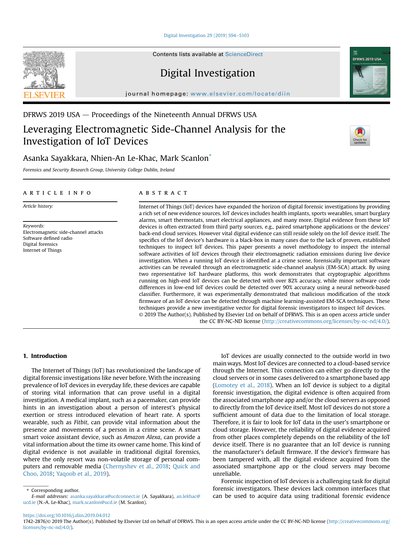 Leveraging Electromagnetic Side-Channel Analysis for the Investigation of IoT Devices
Digital Investigation Vol. 29 pp. S94-S103
- 2018
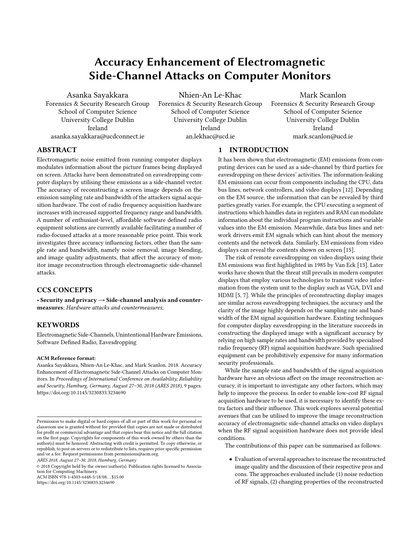 Accuracy Enhancement of Electromagnetic Side-channel Attacks on Computer Monitors
The Second International Workshop on Criminal Use of Information Hiding (CUING), part of the 13th International Conference on Availability, Reliability and Security (ARES)
- 2018
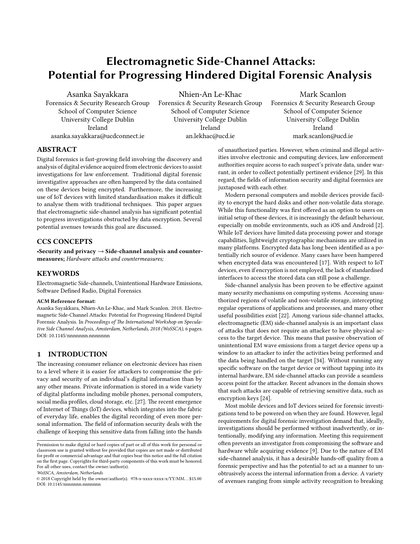 Electromagnetic Side-Channel Attacks: Potential for Progressing Hindered Digital Forensic Analysis
Proceedings of the International Workshop on Speculative Side Channel Analysis (WoSSCA 2018)
- 2024A Digital Forensic Methodology for Encryption Key Recovery from Black-Box IoT Devices
Proceedings of the 12th International Symposium on Digital Forensics and Security
- 2024A Digital Forensic Methodology for Encryption Key Recovery from Black-Box IoT Devices
Proceedings of the 12th International Symposium on Digital Forensics and Security
- 2019A Survey of Electromagnetic Side-Channel Attacks and Discussion on their Case-Progressing Potential for Digital Forensics
Digital Investigation Vol. 29 pp. 43-54
- 2019A Survey of Electromagnetic Side-Channel Attacks and Discussion on their Case-Progressing Potential for Digital Forensics
Digital Investigation Vol. 29 pp. 43-54
- 2018Accuracy Enhancement of Electromagnetic Side-channel Attacks on Computer Monitors
The Second International Workshop on Criminal Use of Information Hiding (CUING), part of the 13th International Conference on Availability, Reliability and Security (ARES)
- 2018Accuracy Enhancement of Electromagnetic Side-channel Attacks on Computer Monitors
The Second International Workshop on Criminal Use of Information Hiding (CUING), part of the 13th International Conference on Availability, Reliability and Security (ARES)
- 2020Cutting through the Emissions: Feature Selection from Electromagnetic Side-Channel Data for Activity Detection
Forensic Science International: Digital Investigation Vol. 32 Article 300927
- 2020Cutting through the Emissions: Feature Selection from Electromagnetic Side-Channel Data for Activity Detection
Forensic Science International: Digital Investigation Vol. 32 Article 300927
- 2023Data Exfiltration through Electromagnetic Covert Channel of Wired Industrial Control Systems
Applied Sciences Vol. 13 Article 2928
- 2023Data Exfiltration through Electromagnetic Covert Channel of Wired Industrial Control Systems
Applied Sciences Vol. 13 Article 2928
- 2020
- 2020
- 2018Electromagnetic Side-Channel Attacks: Potential for Progressing Hindered Digital Forensic Analysis
Proceedings of the International Workshop on Speculative Side Channel Analysis (WoSSCA 2018)
- 2018Electromagnetic Side-Channel Attacks: Potential for Progressing Hindered Digital Forensic Analysis
Proceedings of the International Workshop on Speculative Side Channel Analysis (WoSSCA 2018)
- 2020EMvidence: A Framework for Digital Evidence Acquisition from IoT Devices through Electromagnetic Side-Channel Analysis
Forensic Science International: Digital Investigation Vol. 32 Article 300907
- 2020EMvidence: A Framework for Digital Evidence Acquisition from IoT Devices through Electromagnetic Side-Channel Analysis
Forensic Science International: Digital Investigation Vol. 32 Article 300907
- 2024Ensuring Cross-Device Portability of Electromagnetic Side-Channel Analysis for Digital Forensics
Forensic Science International: Digital Investigation Vol. 48 Article 301684
- 2024Ensuring Cross-Device Portability of Electromagnetic Side-Channel Analysis for Digital Forensics
Forensic Science International: Digital Investigation Vol. 48 Article 301684
- 2020Facilitating Electromagnetic Side-Channel Analysis for IoT Investigation: Evaluating the EMvidence Framework
Forensic Science International: Digital Investigation Vol. 33 Article 301003
- 2020Facilitating Electromagnetic Side-Channel Analysis for IoT Investigation: Evaluating the EMvidence Framework
Forensic Science International: Digital Investigation Vol. 33 Article 301003
- 2021Identifying Internet of Things Software Activities using Deep Learning-based Electromagnetic Side-Channel Analysis
Forensic Science International: Digital Investigation Vol. 39 Article 301308
- 2021Identifying Internet of Things Software Activities using Deep Learning-based Electromagnetic Side-Channel Analysis
Forensic Science International: Digital Investigation Vol. 39 Article 301308
- 2019Leveraging Electromagnetic Side-Channel Analysis for the Investigation of IoT Devices
Digital Investigation Vol. 29 pp. S94-S103
- 2019Leveraging Electromagnetic Side-Channel Analysis for the Investigation of IoT Devices
Digital Investigation Vol. 29 pp. S94-S103
- 2025Low-overhead and Non-invasive Electromagnetic Side-Channel Monitoring for Forensic-ready Industrial Control Systems
Digital Forensics Doctoral Symposium
- 2025Low-overhead and Non-invasive Electromagnetic Side-Channel Monitoring for Forensic-ready Industrial Control Systems
Digital Forensics Doctoral Symposium
- 2024Revealing IoT Cryptographic Settings through Electromagnetic Side-Channel Analysis
Electronics Vol. 13 Article 1579
- 2024Revealing IoT Cryptographic Settings through Electromagnetic Side-Channel Analysis
Electronics Vol. 13 Article 1579
- 2020SoK: Exploring the State of the Art and the Future Potential of Artificial Intelligence in Digital Forensic Investigation
The 13th International Workshop on Digital Forensics (WSDF), held at the 15th International Conference on Availability, Reliability and Security (ARES)
- 2020SoK: Exploring the State of the Art and the Future Potential of Artificial Intelligence in Digital Forensic Investigation
The 13th International Workshop on Digital Forensics (WSDF), held at the 15th International Conference on Availability, Reliability and Security (ARES)